The Imminent Rise of Bitcoin

Back in October, Astraeus sold our entire bitcoin position at around $115,000 and moved to cash. We have stayed in cash ever since, watching bitcoin grind sideways and then lower while other risk assets pushed on without it. That trade did its job in saving capital. The next trade to ride Bitcoin higher is what this ledger is about.
Bitcoin has spent the past several months looking like the asset everyone forgot about. Stocks have pushed to new highs, the Russell is finding a bid, and the System has been firmly Risk-On for months, yet bitcoin has done very little. The consensus take is that bitcoin's cycle is broken, that ETFs have permanently changed the structure, that the supercycle theory has run out of road.
We disagree. The setup for the next leg of bitcoin's cycle is forming quietly, and we're approaching the inflection point where it activates. This ledger walks through what makes bitcoin move, why it has been lagging, and what we're waiting on before our model takes a leveraged long.
Bitcoin On The Risk Curve
Before working out whether the supercycle is here, you have to understand what makes bitcoin move in the first place. Every asset sits somewhere on the risk curve. The further out you go, the higher the potential return and the larger the potential loss. Bitcoin sits at the far end. It is one of the few highly liquid assets on the market with that profile, which means it only catches a real bid when risk appetite is genuinely overflowing.
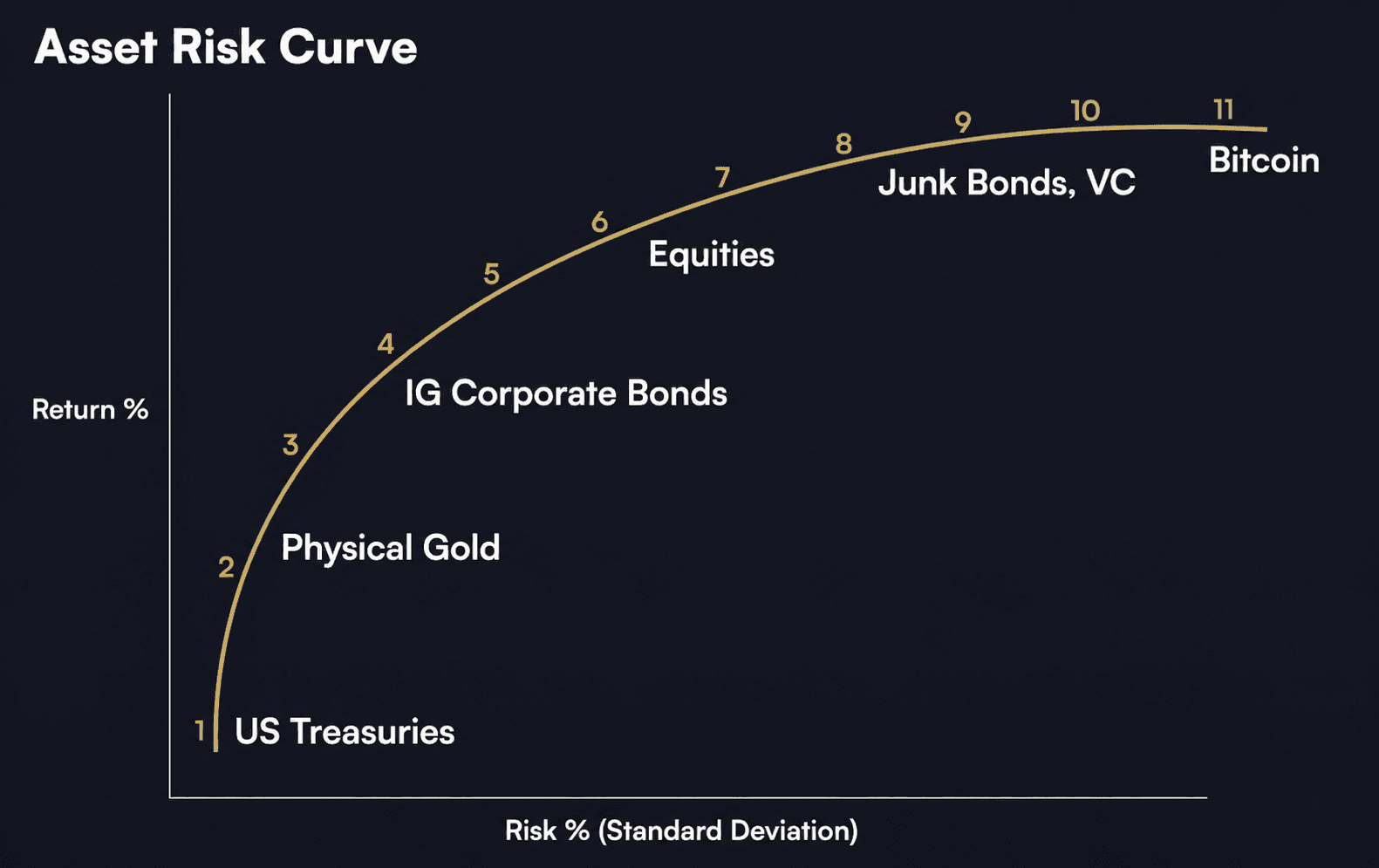
Treasuries respond to growth and inflation. Equities respond to earnings and rates. Bitcoin responds to excess. There is no dividend, no cash flow, no central bank backstop. The only structural support underneath the asset is finite supply, and finite supply does very little when there is no one left to buy. The most recent bear market is a fair reminder of what that asymmetry looks like in reverse, with bitcoin drawing down roughly 50% as risk appetite faded.
Knowing the difference between environments that benefit bitcoin and environments that punish it is the entire game. Catch the upside, sit out the downside, and bitcoin becomes one of the most rewarding assets in markets. Get that distinction wrong and it becomes one of the most dangerous.
Why It's been Lagging
Since bitcoin became liquid enough to trade institutionally, every bull market has lined up with a Risk-On regime, and every bear market has lined up with a Risk-Off regime. We have now been in Risk-On for several months, but bitcoin has lagged tech and the Russell 2000 by a wide margin. The reason is straightforward. Bitcoin is the release valve for excess liquidity, and we have not seen that excess yet.
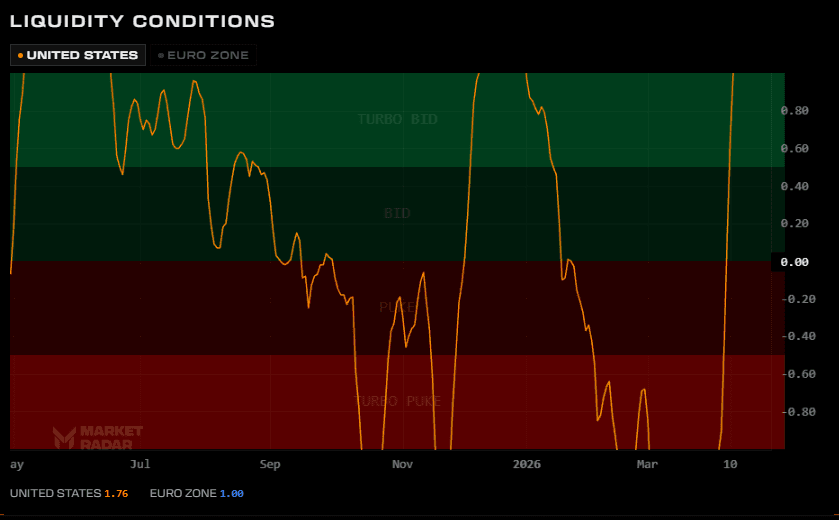
Our Liquidity Conditions Index has been pinned to its highs since April 13th, and bitcoin has been gradually grinding higher alongside it. But risk appetite still has more room to run. Stocks have only just broken to new highs. As equities and other risk assets start looking stretched, capital tends to migrate further out the curve in search of the next underperforming corner. Bitcoin is the most underperforming corner there is.
🚀 Join the Radar Community
Get free access to MacroBase and notifications about new posts and updates.
That is the macro structural piece. The other half of the equation is momentum.
The Momentum Flywheel
Bitcoin is one of the most momentum-driven assets in markets, which is obvious to anyone who has watched retail go silent during drawdowns and loud at the highs. In a bear market, bitcoin behaves like a dead asset. There is no reason to allocate to it, it pays nothing, the only thing supporting it is the supply schedule, and capital exits at an exponential rate. Once the asset starts moving higher, the flywheel kicks in. Everyone knows what bitcoin is capable of when it gets going, and momentum starts feeding on itself.
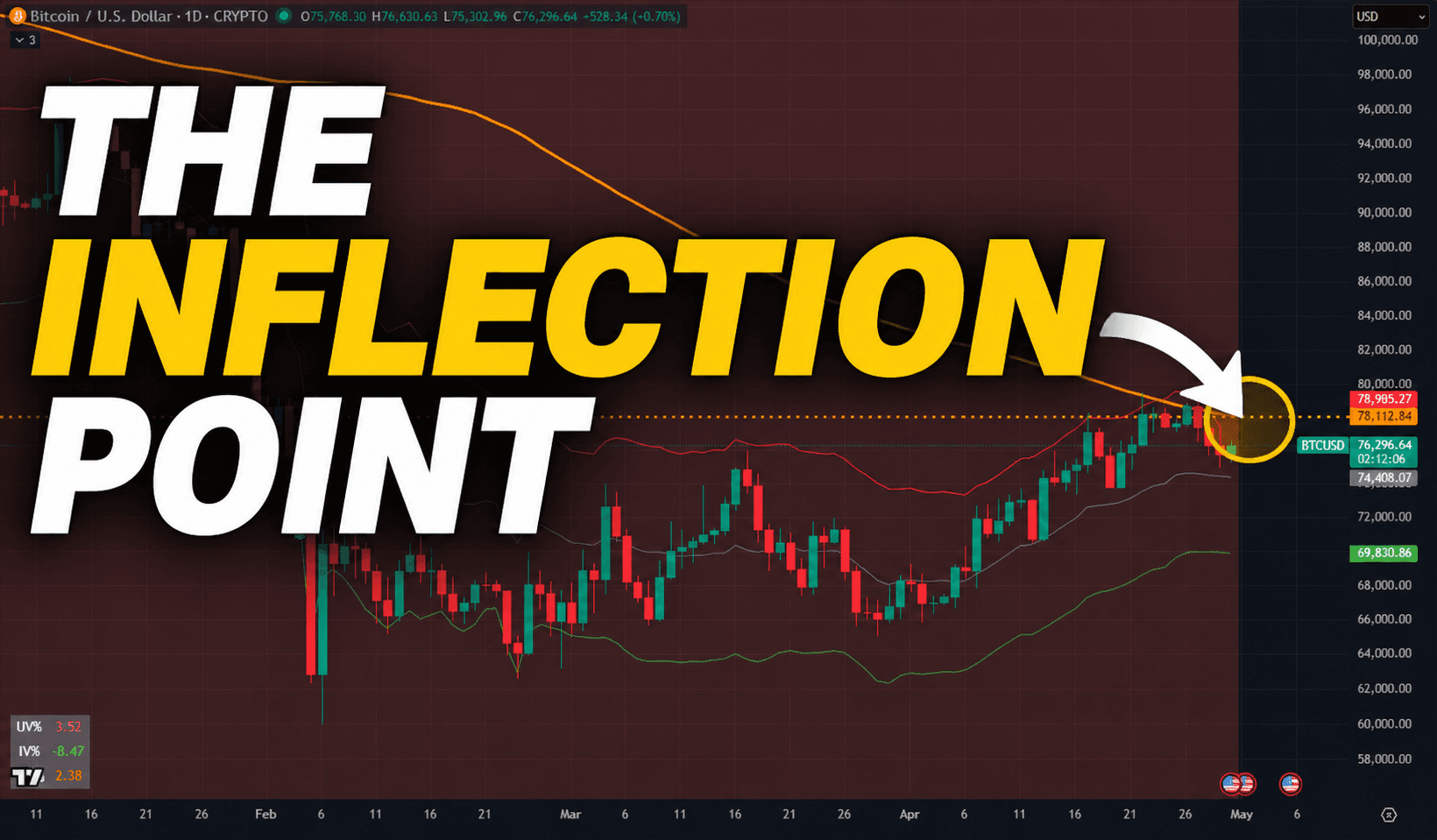
We measure these shifts through DDAP, our trend model. The momo line defines the trend, and the background coloring tells us whether the trend is bullish, neutral, or bearish. Historically, when bitcoin flips into a bullish DDAP trend, the floodgates of buyers open. That is the signal we wait on, and it is the signal currently within striking distance.
How We Trade It
We trade bitcoin systematically through Astraeus, our bitcoin-focused 2x leveraged strategy. The rules do not bend for narrative, sentiment, or how attractive price happens to look at the moment. They are backtested and applied as written.
Astraeus enters a long position when both of the following are true:
1. The System is in a Risk-On regime (Expansion, Inflation, Guarded Inflation, or Early Cycle)
2. Bitcoin/USD (CRYPTO Exchange) is in a bullish DDAP trend, with one exception: in the Early Cycle regime, the trend filter is bypassed.
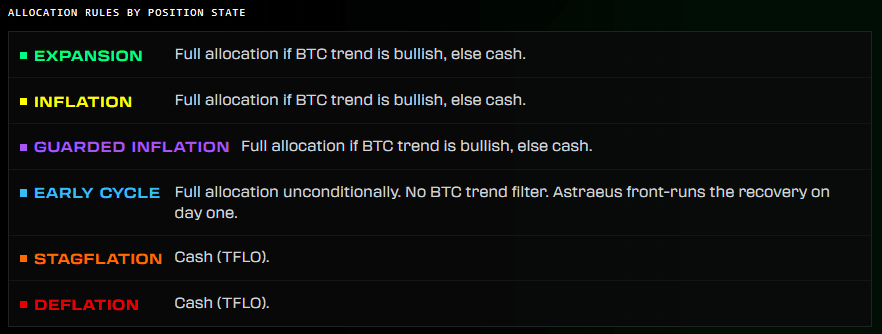
We are currently in an Inflation regime, so the regime side of the equation is already met. The piece missing is the trend. Bitcoin is roughly 2% below momo. If price breaks above momo and holds for several days, the trend confirms. As long as we are still in a Risk-On regime when that happens, Astraeus enters at 2x leverage regardless of where price sits at the time.
This is where most traders get hung up. If bitcoin runs another 10% before the signal fires, the entry does not change. When the system says buy, we buy, because the confirmation itself is the edge. It filters out the fakeouts that drain capital in choppy ranges and only triggers once the trend has earned the benefit of the doubt. Chasing the entry lower has been one of the costliest habits in bitcoin's history. The model is designed not to make that mistake.
What We're Watching For
This ledger isn't to call to front-run the trend, but it's a description of what we're watching for and what changes when it happens. The setup is the closest it has been since we sold at $115k, but until momo confirms, Astraeus stays in cash. That is by design. The strategy isn't trying to nail the bottom, it is trying to capture sustained moves with size and leverage. When the conditions align, we will be positioned. Until they do, we wait.